How Food Waste and Food Rescue Connect Hunger, Ethics, Poverty, and Sustainability
| Although food rescue can help reduce waste and support people in need, food waste and hunger are connected problems that require both immediate community-based responses and long-term changes to how food is produced, distributed, priced, and valued. |
Introduction
Food waste is one of the clearest signs that there is a major disconnect in how our food system works. Grocery stores, restaurants, farms, cafeterias, and households throw away enormous amounts of food, while many people struggle to afford enough nutritious food for themselves and their families.
Food rescue programs try to respond to this problem by redirecting safe, edible surplus food to people who need it. These programs are important because they reduce waste and provide immediate help to communities experiencing food insecurity. However, food rescue is not a complete solution on its own. Food loss, food waste, hunger, poverty and environmental sustainability are all connected, requiring a solution that is more complex than simply donating leftovers.
This blog explores the scale of food waste, its connection to hunger and environmental damage, how food rescue works, and why reducing food waste requires both individual action and larger food system change
The Scale of Food Waste
Food waste is not just a household mistake or a few forgotten leftovers in the fridge. It is a global food-system problem. The Food and Agriculture Organization of the United Nations (FAO) reports that 13.2% of food is lost after harvest and before reaching retail. The United Nations Environment Programme (UNEP) reports another 19% is wasted at the retail, food service and household levels (UNEP, 2024). This shows that it is not just a consumer problem, but that waste happens across every stage of the food system. The UNEP also reported that 1.05 billion tonnes of food waste were generated globally in 2022 at the household, food service, and retail levels, and that individual households were responsible for 60% of that waste (UNEP, 2024). This shows food waste across the food system, but that household behavior plays a major role.
Canada also has a serious food waste problem. Second Harvest reports that 46.5% of all food produced for Canada is wasted each year. Even more concerning, 41.7% of that waste is avoidable, meaning it could potentially have been eaten or redirected. Second Harvest estimates the value of avoidable food waste at $58 billion (Second Harvest, 2024). These numbers show that food waste is not only an environmental issue; it is also an economic and ethical issue.
Every wasted food item represents more than just the wasted food itself. It also represents the land, water, labour, packaging, transportation, refrigeration, and energy used to produce it. When food is discarded, all of those resources are wasted as well.
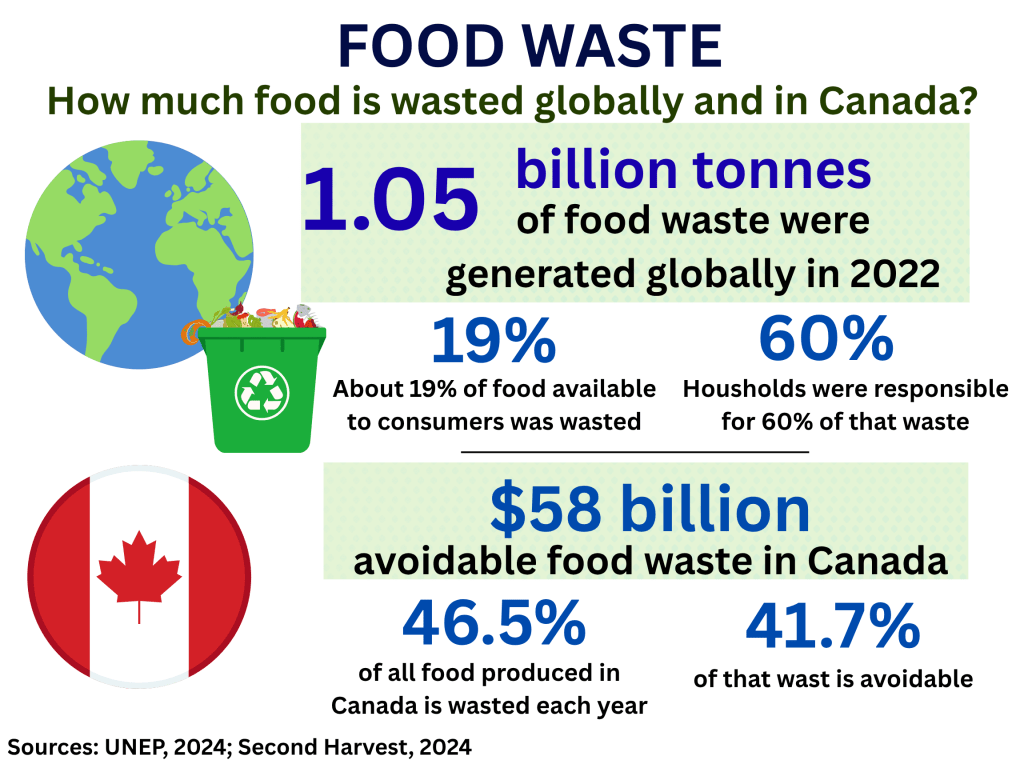
Figure 1. Food waste is both a global and Canadian issue, with major social, economic, and environmental consequences (Second Harvest, 2024; UNEP, 2024).
Hunger In Canada
Food waste becomes even harder to accept when it is compared with food insecurity. Hunger is not just something that happens in third world countries but a huge issue everywhere, including in Canada. Food Banks Canada reported that in March 2025 there were nearly 2.2 million food banks visits across the country, the highest number in Canadian history (Food Banks Canada, 2025). This shows how much pressure food banks are under and how many people are struggling to afford basic groceries.
Food insecurity is bigger than the number of people helped by food banks. Some people who are food insecure never go to a food bank because of transportation barriers, stigma, limited hours, dietary needs, or lack of availability in their area. PROOF, a University of Toronto research program, reports that 9.8 million Canadians, including 2.4 million children, lived in food-insecure households in 2025 (PROOF, 2014). These numbers show that food insecurity is not caused by a simple shortage of food. It is also connected to poverty, high housing costs, low wages, disability, inflation, culturally appropriate foods; and unequal access to resources.
This is what makes the food waste problem so frustrating. The issue is not that we do not produce enough food. The issue is that food is not always distributed, priced, or valued in a way that ensures equal access for all people.
Food Waste Is Also an Environmental Problem
Food waste is not only a social issue; it is also a climate issue. The FAO states that food loss and waste accounts for an estimated 8% to 10% of global greenhouse gas emissions (FAO, 2025). When food decomposes in landfills, it can release methane, a greenhouse gas. However, the environmental impact of wasted food begins long before it reaches the garbage.
Food production itself uses enormous resources. Our World in Data reports that food production accounts for about 26% of global greenhouse gas emissions, uses around half of the world’s habitable land, and accounts for about 70% of global freshwater withdrawals (Ritchie et al, 2022). Therefore, wasting food means wasting the environmental resources used to produce that food.
This makes food waste one of the clearest examples of how everyday choices connect to larger global issues. A bag of wilted lettuce or a container of leftovers may seem small, but multiplied across households, restaurants, grocery stores, and supply chains, wasted food becomes a major environmental problem.
What Is Food Rescue?
Food rescue is one practical way to reduce the harm caused by food waste. Food rescue organizations collect safe surplus edible food from farms, manufacturers, grocery stores, restaurants, and other food businesses and redirect it to charities, shelters, community programs, and people who need it.
This is important because food rescue helps connect excess food with food insecurity. Second Harvest reports that Canada’s food industry produces 3.2 million metric tonnes of surplus edible food each year, but only 4% of that surplus is rescued and redistributed. That means 96% of surplus edible food still goes to waste instead of helping people who need it (Second Harvest, 2022).
Donated food still needs to be safe to eat, properly handled, and distributed in ways that respects people’s cultural differences and dignity. Food rescue should not mean giving people unwanted scraps; it should mean recognizing that good food should not be wasted when people are hungry.
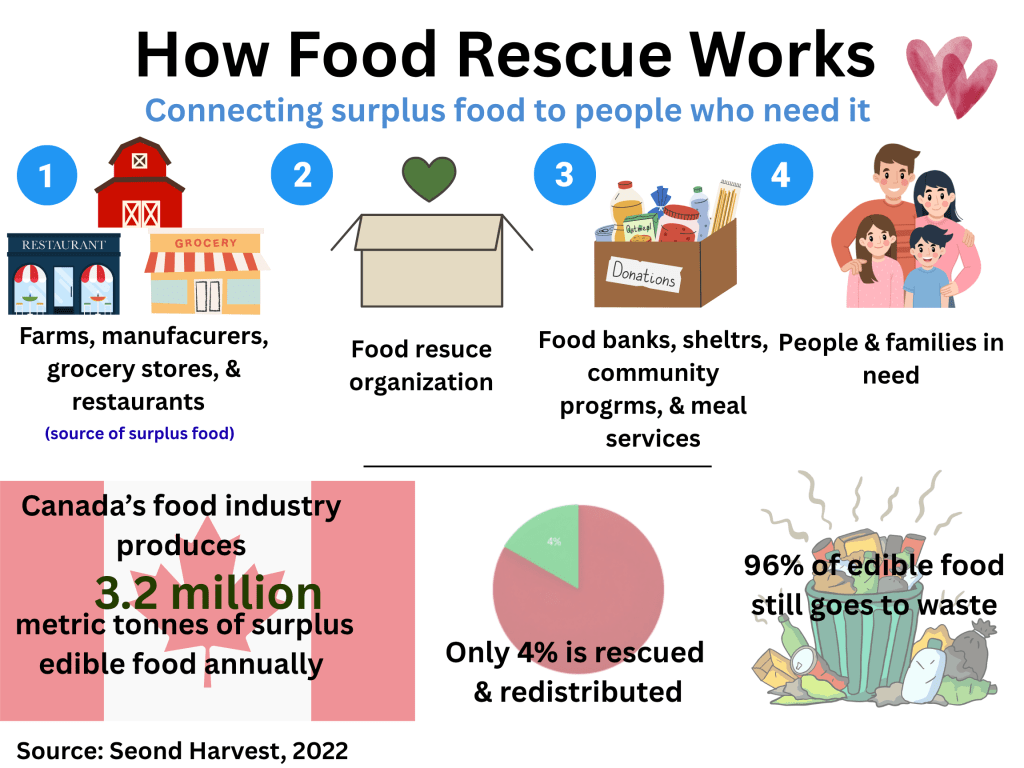
Figure 2. Food rescue redirects safe surplus food from businesses and producers to community organizations that provide food to people who need it (Second Harvest, 2022).
Is Food Rescue Enough?
Food rescue is important, but it is not enough on its own. It can provide immediate relief, but it does not solve the deeper reasons people cannot afford food. Rescued and redirected food may help someone today, but it does not fix low income, unaffordable rent, rising grocery or gasoline prices, or limited access to healthy food in some communities.
This is why food rescue should be viewed as both helpful and limited. It is helpful because it prevents edible food from being wasted and helps people quickly. It is limited because hunger is not only caused by food shortage. Hunger is often caused by poverty and inequality. If society treats food rescue as the entire solution, it risks ignoring the deeper causes of food insecurity.
A stronger response would combine food rescue with long-term changes: reducing waste across the food system, improving affordability, supporting income security, educating consumers about food storage and best-before dates, and making it easier for businesses to donate safe surplus food.
What Can Students and Families Actually Do?
The food waste problem is large, but individuals still have a role. Love Food Hate Waste Canada recommends practical habits such as planning meals, shopping with a list, buying only what is needed, using leftovers, checking what is already in the fridge or pantry, and making a plan for how food will be used (Love Food Hate Waste Canada, 2025).
Students and families can also reduce waste by freezing food before it spoils, making a “use-it-up” meal once a week, understanding the difference between “best before” and true food safety concerns, packing leftovers for lunch, and supporting local food rescue organizations. Schools can help by reducing cafeteria waste, donating safe surplus food where permitted, and teaching students about the connection between food waste, hunger, and climate change.
One of the most important ideas is that sustainable eating does not have to be expensive or perfect. Sometimes the most sustainable food choice is simply the food that actually gets eaten.
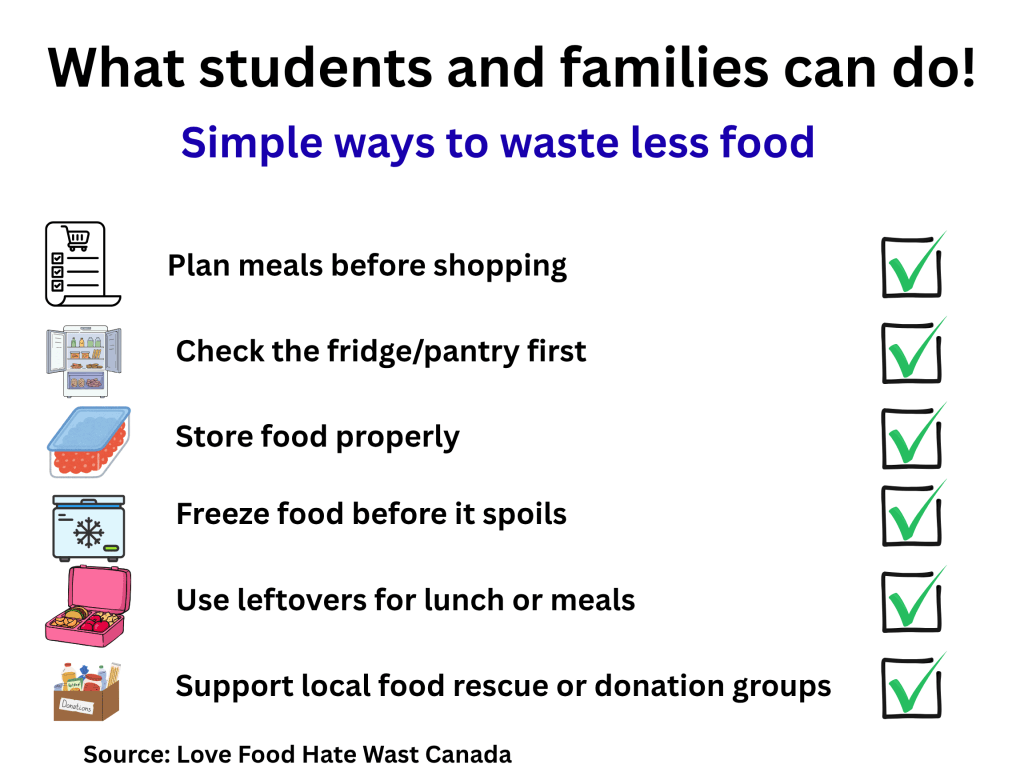
Figure 3. Students and families can reduce food waste through meal planning, proper storage, freezing, eating leftovers, and support for local food rescue programs (Love Food Hate Waste Canada, n.d.).
My Perspective
Researching food waste, sustainability, and food rescue made me realize that this issue is not just an individual responsibility; it is also about how the food system is organized. It is difficult to accept that edible food can be thrown away while people in the same country must rely on food banks. Researching food waste, sustainability, and food rescue made me realize that this issue is not just an individual responsibility, but it is also about how the food system is organized.
Food rescue is very helpful because it takes something that was going to be wasted and uses it to help feed people. However, it is addressing just one aspect of a food system that involves poverty and food insecurity. People should not have to depend on leftover surplus food in order to eat. Food rescue can reduce harm, but a truly fair food system would also make healthy, reliable food affordable and accessible to everyone in the first place.
Conclusion
Food waste and hunger should not coexist, but they do. The fact that billions of kilograms of food are wasted annually while people struggle to feed themselves and their families is a serious ethical failure in the food system. Food rescue programs offer an important and practical response by redirecting safe surplus food to people who need it, reducing both waste and environmental harm.
However, food rescue only helps to a point. It is not a complete solution. The real goal should be a food system that wastes less, values food more, and ensures that all people can access nutritious food equally and with dignity. Reducing food waste is not only about saving leftovers; it is about rethinking how society produces, distributes, consumes, and values food.
References
Food Loss and Food Waste | Policy Support and Governance Gateway. (n.d.). Food and Agriculture Organization of the United Nations. Retrieved May 20, 2026, from https://www.fao.org/policy-support/policy-themes/food-loss-and-food-waste/fao-policy-series–food-loss—food-waste
Food Waste Index Report 2024. (2024, March 27). UNEP – UN Environment Programme. https://www.unep.org/resources/publication/food-waste-index-report-2024
Household Food Insecurity in Canada. (n.d.). PROOF | Food Insecurity Policy Research. Retrieved May 20, 2026, from https://proof.utoronto.ca/food-insecurity/
HungerCount 2025. (2025). Food Banks Canada. https://foodbankscanada.ca/hunger-in-canada/hungercount/overall-findings/
Love Food Hate Waste. (n.d.). LoveFoodHateWaste; FoodMesh. Retrieved May 20, 2026, from https://lovefoodhatewaste.ca/
New data on household food insecurity in 2025. (2026, April 29). PROOF | Food Insecurity Policy Research. https://proof.utoronto.ca/2026/new-data-on-household-food-insecurity-in-2025/
Ritchie, H., Roser, M., & Rosado, P. (2022). Environmental Impacts of Food Production. Our World in Data. https://ourworldindata.org/environmental-impacts-of-food
The Avoidable Crisis of Food Waste: Update. (2024, October 22). Second Harvest. https://www.secondharvest.ca/research/avoidable-crisis-updated
What is Surplus Edible Food (and Why Should You Care)? | Second Harvest. (2022, May 3). Second Harvest. https://www.secondharvest.ca/post/what-is-surplus-edible-food

 CarysTheNutritionGirl
Leave a comment