The Hidden Reality of Energy Drinks
Although energy drinks are commonly marketed as ways to improve focus, athletic performance, and productivity, growing evidence suggests that excessive consumption – particularly among children and teens – may contribute to serious cardiovascular, neurological, and psychological health risks that are often minimized by modern marketing culture.
Introduction
Energy drinks have become a normal part of modern teen culture. They are sold in convenience stores, promoted in gyms, featured in social media feeds, and associated with gaming, athletic events, and busy lifestyles. For many young people, energy drinks are not just beverages, they are marketed almost like accessories for success. Bright packaging, influencer endorsements, and fitness branding often make these drinks appear exciting, trendy, and even healthy.
According to the Centers for Disease Control and Prevention, 30-50% of adolescents are reported to consume energy drinks (Center for Disease Control and Prevention [CDC}, 2024). This statistic is concerning because energy drinks are often marketed as harmless “energy” boosters even though they contain high levels of caffeine, added sugars or sweeteners, and other stimulant ingredients. The issue is not that one energy drink will automatically harm everyone. The issue is that these products are being normalized among young people who may not fully understand what they are consuming.
This blog post explores what is actually in energy drinks, why teenagers may be especially vulnerable to their effects, how social media marketing makes these products seem healthier than they are, and why young consumers should be more critical before reaching for a can.
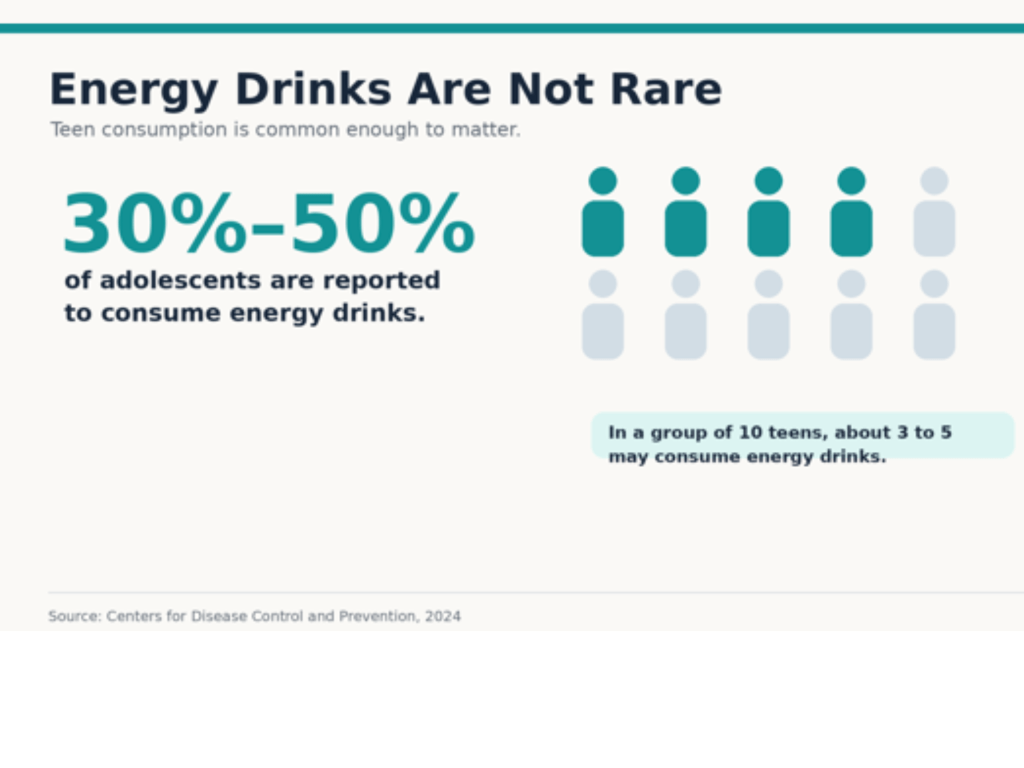
Figure 1. Energy drink consumption is common among adolescents, making youth caffeine exposure an important public health issue (CDC, 2024).
What Is Actually in an Energy Drink?
Energy drinks are different from regular soft drinks, sports drinks, or flavoured water. Health Canada describes caffeinated energy drinks as prepackaged drinks or mixes that contain added caffeine above a certain amount. They often contain other ingredients such as taurine, B vitamins, L-carnitine, minerals, sugar or sweeteners, herbal ingredients, guarana and yerba mate (Health Canada, 2024). Guarana, and yerba mate are natural sources of caffeine, meaning a drink may contain multiple caffeine-related ingredients even if consumers do not recognize them all.(Health Canada, 2024).
In Canada, Health Canada restricts caffeine from all sources in caffeinated energy drinks to 180 mg per serving (Health Canada, 2024). This shows that energy drinks contain enough stimulant content that the government sets limits and requires warning labels. Health Canada also requires caffeinated energy drinks to carry the statement “High caffeine content” and warnings such as “Not recommended for those under 14 years old” and “Do not drink more than X serving(s) per day” (Health Canada, 2024).
Despite these warnings, many people underestimate the potency of energy drinks because they are displayed and sold alongside pop, juice, sports drinks, and bottle water. Children and adolescents may assume that they are equally safe because they are displayed` together. However, energy drinks are stimulant-containing products that can affect sleep, mood, heart rate, breathing, blood pressure, and anxiety levels, especially in young people (Corkins, 2025).
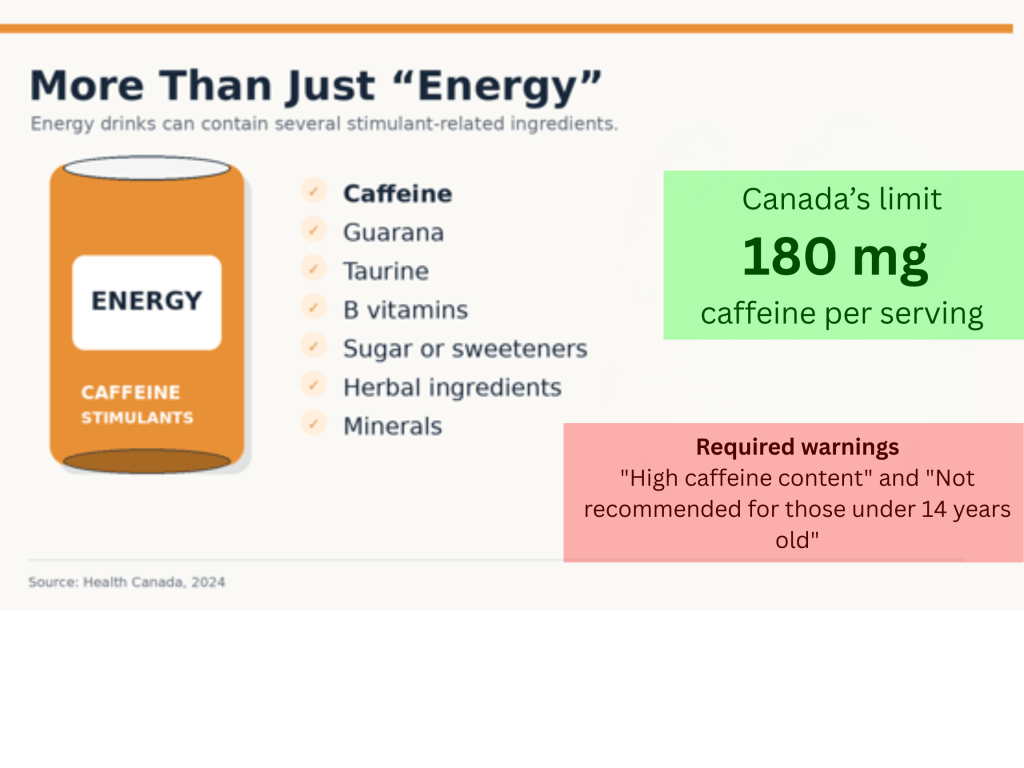
Figure 2. Energy drinks may contain caffeine, guarana, taurine, sugar or sweeteners, and other stimulant-related ingredients. In Canada, caffeine from all sources in caffeinated energy drinks is limited to 180 mg per serving (Health Canada, 2024)
Why Are Teens Especially Vulnerable?
Teenagers are not simply smaller adults. Their bodies and brains are still developing and caffeine may affect them differently than it affects healthy adults. HealthyChildren.org, a parent information site from the American Academy of Pediatrics, explains that children’s growing bodies and brains may be more sensitive to caffeine stimulation. Possible side effects include fast or irregular heartbeat, elevated blood pressure, rapid breathing, anxiety, nausea, restlessness, diarrhea, and sleep loss (Corkins, 2025).
Sleep is one of the biggest concerns. Many teenagers already do not get enough sleep because of school, homework, sports, jobs, social lives, and screen time. Caffeine may temporarily make someone feel more awake, but it does not replace sleep. HeatlhyChildren.org explains that caffeine can create a quick burst of energy, but only sleep repairs the body ad refreshes the mind (Corkins, 2025). This can create a cycle; a tired student uses an energy drink containing caffeine to stay awake, sleeps worse later, feels even more tired the next day, and reaches for another energy drink.
The Canadian Paediatric Society explains that caffeinated energy drinks may affect children and adolescents more strongly than adults because young people usually weigh less. As a result, they may receive greater exposure to stimulant ingredients per kilogram of body weight (Pound et al., 2017). In other words, two people can drink the same can, but the effect may be stronger in a smaller teenager than in an adult.
How Energy Drinks Are Marketed to Teens
One reason energy drinks have become so popular among young people is the way they are marketed. Energy drink companies do not only relay on traditional advertising, they also use social media. TikTok creators, YouTubers, athletes, gamers, and fitness influencers help integrate their products directly into youth culture. Influencers are often shown consuming energy drinks before workouts, studying, gaming sessions, or busy workdays.
This style of marketing is powerful because it connects energy drinks with success, popularity, discipline, athleticism, and achievement. Instead of being viewed as stimulant-containing products, energy drinks can start to look like symbols of motivation and confidence. Brands such as Prime became extremely popular because they were promoted by internet celebrities Logan Paul and KSI, whom have large youth audiences. Fitness-focused brands such as Celsius use a different strategy; they present energy drinks though wellness, gym culture, and “clean energy”” messaging.
Celsius is a strong example of the “health halo” problem. The Guardian describes Celsius as an energy drink with 200mg of caffeine per can that has gained popularity because of its wellness-coded image. Its packaging uses fruit imagery, slim cans, workout graphics, and the slogan “Live Fit’”. The Guardian also notes that caffeine is not emphasized on the front of the can; instead, Celsius uses softer language such as “essential energy” (Demopoulos, 2024). This type of branding can make a high-caffeine drink seem more like a wellness product than a stimulant-containing beverage.
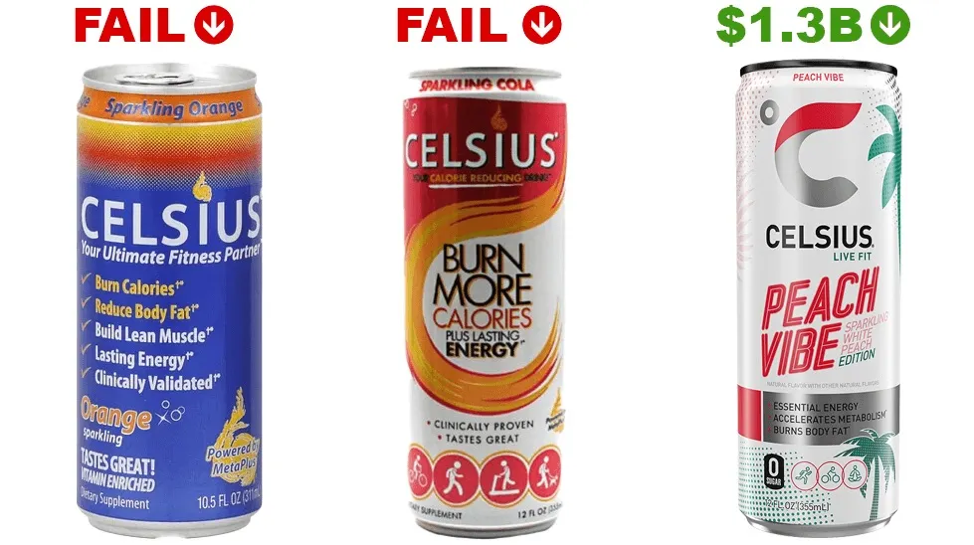
Figure 3. The rise of Celsius shows how energy drink branding has shifted from traditional “extreme energy” marketing toward wellness-style packaging, fitness messaging and lifestyle branding. This kind of presentation can make a high-caffeine product appear healthier or more appealing to young consumers. Image Source: Kapur, 2025
Marketing exposure also matters. A Canadian study by Wiggers et al. (2019) found that 81.8% of youth and young adults had seen energy drink marketing, while only 32% had seen educational messages warning about the health risks. This imbalance means teenagers are constantly seeing energy drinks presented as healthy, cool and productive, but rarely are exposed to warnings about the possible risks.
I created a short video comparing energy drink marketing claims with the ingredients, caffeine content, and warnings found on the label.
This label comparison shows why energy drinks should be evaluated carefully. The front of the can often sells energy, wellness, and fun, but the back of the can reveals caffeine levels, stimulant ingredients, and warnings that are easy to overlook.
The Health Risks Behind the “Energy” Promise
Energy drink companies often present their products as solutions to tiredness, low motivation, poor concentration, or weak athletic performance. However, the same ingredients that increase alertness can also negatively impact the body. Scientific research raises significant concerns about the potential health effects of energy drink consumption. The CDC explains that energy drinks often contain large amounts of caffeine, added sugars, other additives and legal stimulants such as guarana, taurine, and L-carnitine. These ingredients an increase alertness, attention, and energy, but they can also increase blood pressure, heart rate, and breathing (CDC, 2024).
John Hopkins Medicine reports that almost one-third of teens ages 12 to 17 drink energy drinks regularly, and warns that rising consumption among young people is a health concern (Green & Hernandez, 2024). Johns Hopkins also explains that children and teens may be more susceptible to caffeine-related risks because of their developing brains, smaller body size, and reduced ability to self-limit intake. Reported side effects include tachycardia (rapid heartbeat), tachypnea (rapid breathing), arrhythmias (irregular heartbeats), systemic hypertension (increased blood pressure), anxiety/agitation, sleep disturbances/insomnia, headaches, nausea, dehydration, diarrhea, heart palpitations, and panic attacks (Green & Hernandez, 2024).
Several Canadian studies reported almost two thirds of Canadian adolescents have ingested energy drinks (Hamilton et al., 2013; Pound et al., 2017). Hammond et al. (2018) found that of the more than half of Canadian youth who had consumed energy drinks, at least one negative health effect was noted, including rapid heartbeat, anxiety, nausea, rapid breathing, restlessness, difficulty sleeping, chest pain, gastrointestinal problems, and, rarely seizures (Hammond et al., 2018). This Canadian data is important because it shows how wide-spread the negative side effects are after consuming energy drinks.
Serious Side Effects and Emergency Concerns
It would be inappropriate to claim that every energy drink is extremely dangerous or that one drink will automatically cause a medical emergency. Risk depends on many factors, including age, body size, total caffeine intake, health history, number of drinks consumed, and whether energy drinks are combined with other caffeine or stimulant-containing products.
However, serious reactions have been reported.The CDC states that in 2011, 1,499 adolescents ages 12 to 17 went to the emergency room for an energy-drink-related emergency (CDC, 2024). The FDA has received reports linking energy drink consumption to serious adverse reactions, including elevated blood pressure, convulsions, and heart rhythm abnormalities, and, even, death, although these reports do not prove that energy drinks were the sole cause in every case (Harvard Health Publishing, 2025).
Balance is the key point. Energy drink risks should not be exaggerated, but they also should not be treated as harmless. These products can be especially concerning for teens because they are heavily marketed, easy to buy, and often consumed without much thought about total caffeine intake.
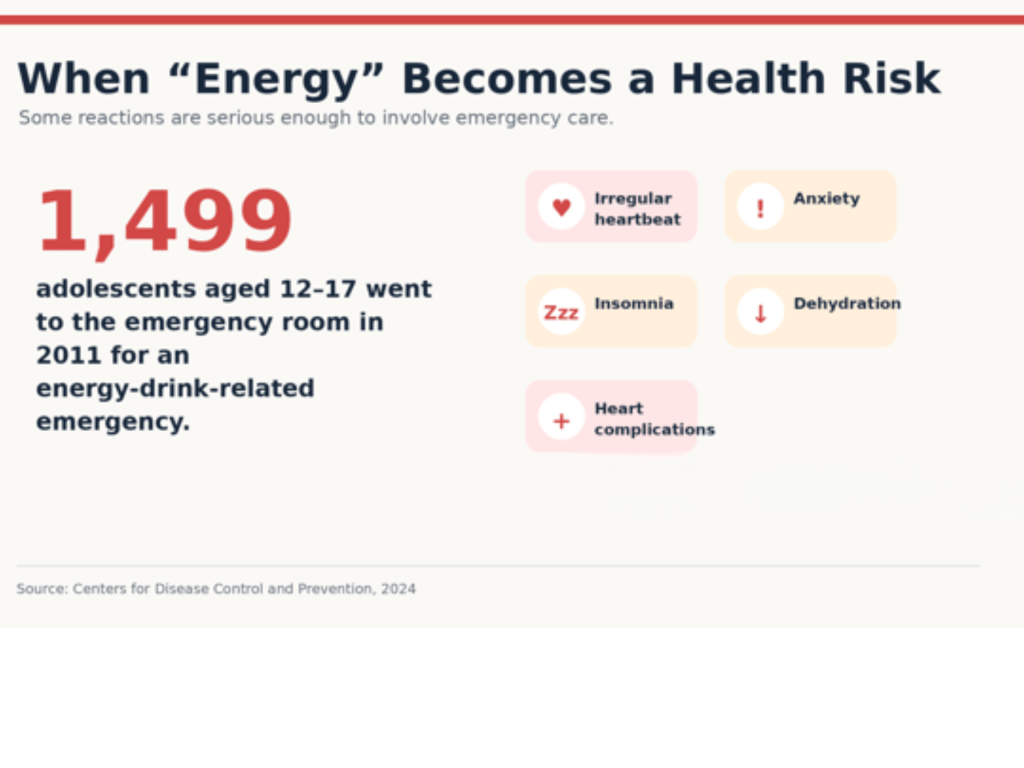
Figure 4. Energy drinks can be involved in serious health situations, especially when consumed heavily, combined with other caffeine sources, or used by people with underlying health conditions (CDC, 2024).
The “Healthy” Energy Drink Problem
Another major issue is the belief that some energy drinks are automatically ‘healthy’ because they are sugar-free, low-calorie, vitamin-containing, or marketed toward fitness communities. Before researching this topic, I assumed sugar-free energy drinks were automatically healthier. In reality, while sugar-free energy drinks can be more beneficial compared to high-sugar drinks, many still contain extremely high levels of caffeine and other stimulants (Harvard Health publishing, 2025). Sugar-free does not mean healthy or risk-free.
Harvard Health warns that even healthy people should not rely on energy drinks as a daily or long-term energy strategy (Harvard Health Publishing, 2206). Health Canada also requires caffeine warnings on caffeinated energy drinks regardless of whether they contain sugar (Health Canada, 2024).
This is why the ‘health halo’ is so powerful. A product can seem healthy because it is sugar-free and has sleek packaging, fruit flavours, vitamins, influencer promotion, or a fitness image. However, those features do not change the stimulant effects of caffeine. A drink may look wellness-focused while still containing enough caffeine to disrupt sleep, increase anxiety, or affect heart rate.
Social Media, Productivity, and Stimulant Culture
Social media has also normalized the idea that young people need constant stimulation in order to function successfully. Many teenagers are balancing academics, sports, jobs, and social lives often feel pressure to remain productive despite sleep deprivation and exhaustion. Energy drinks are frequently marketed as solutions to these problems, encouraging consumers to ‘push through’ fatigue instead of addressing the underlying causes such as stress, poor sleep, or unrealistic expectations.
This creates a concerning cycle in which stimulants are increasingly relied upon to maintain performance and productivity. The problem is that caffeine can mask fatigue without solving it. A 2025 expert consensus statement from Healthy Eating Research recommends that beverages with caffeine and other stimulants are not part of a healthy diet for children and adolescents. The report recommends plain water as the primary drink for hydration (Healthy Eating Research, 2025). CPS has gone even further by supporting stronger legislation to prevent marketing of caffeinated energy drinks to children and adolescences (Pound et al., 2017).
My Perspective
In my opinion, occasional energy drink consumption may not necessarily be harmful for healthy adults, but the normalization of daily stimulant use among teenagers is concerning. Many young consumers are exposed to aggressive marketing long before they fully understand the potential health consequences associated with excessive caffeine intake. Energy drink companies profit from selling the idea that productivity, athletic performance, and social success can be obtained through stimulants, even though proper sleep, nutrition, hydration, and stress management are far healthier long-term solutions.
This does not mean I think one energy drink will harm everyone. However, I do think teenagers should be much more aware of what they are consuming. If a product is not recommended for children and teens by public health and paediatric sources, then it should not be marketed in a way that makes it feel like a normal part of youth culture.
Conclusion
Energy drinks represent a current cultural obsession with productivity, performance, and constant stimulation. Although these drinks are marketed as fun, healthy, and success-focused, growing scientific evidence suggests that excessive consumption may pose significant health risks, especially for adolescents and young adults.
There is strong evidence that shows that many teens consume energy drinks many report negative side effects, and major health organizations warn against caffeine and stimulant beverages for children and adolescents. At the same time, energy drink companies continue to use social media, fitness culture, influencer marketing, and wellness-style packaging to make these products seem safe and even healthy. Understanding the difference between marketing and reality allows young people to make more informed decisions about what they put into their bodies.
References
affeinated energy drinks. (2024, May 2). Government of Canada; Health Canada. https://www.canada.ca/en/health-canada/services/food-nutrition/supplemented-foods/caffeinated-energy-drinks.html
Corkins, M. (2025, August 11). The Effects of Caffeine on Kids: A Parent’s Guide. HealthyChildren.org; American Academy of Pediatrics. https://www.healthychildren.org/English/healthy-living/nutrition/Pages/the-effects-of-caffeine-on-kids-a-parents-guide.aspx
Demopoulos, A. (2024, September 19). “A troubling halo of health”: how Celsius became Red Bull for women. The Guardian; The Guardian. https://www.theguardian.com/business/2024/sep/19/celsius-energy-drink
Green, S., & Hernandez, R. (2024, June 4). Energy Drinks and Kids: What You Need to Know. Johns Hopkins Medicine. https://www.hopkinsmedicine.org/health/wellness-and-prevention/energy-drinks-and-kids
Hamilton, H. A., Boak, A., Ilie, G., & Mann, R. E. (2013). Energy drink consumption and associations with demographic characteristics, drug use and injury among adolescents. Canadian Journal of Public Health, 104(7), e496–e501. https://doi.org/10.17269/cjph.104.3998
Hammond, D., Reid, J. L., & Zukowski, S. (2018). Adverse effects of caffeinated energy drinks among youth and young adults in Canada: a Web-based survey. CMAJ Open, 6(1), E19–E25. https://doi.org/10.9778/cmajo.20160154
Healthy Beverage Consumption in School-Age Children and Adolescents: Recommendations from Key National Health and Nutrition Organizations | Healthy Eating Research. (2025, January). Healthy Eating Research. https://healthyeatingresearch.org/research/healthy-beverage-consumption-in-school-age-children-and-adolescents-recommendations-from-key-national-health-and-nutrition-organizations/
Kapur, N. S. (2025, April 11). From Obscure to Unmissable: How Celsius Became the Brand I Couldn’t Ignore Without Taking a Sip. Medium. https://medium.com/@nikhilskapur/from-obscure-to-unmissable-how-celsius-became-the-brand-i-couldnt-ignore-without-taking-a-sip-a9d20014d5a6
Komaroff, A. L. (Ed.). (2025, August 7). Are energy drinks bad for you? Harvard Health Publishing; Harvard Medical School. https://www.health.harvard.edu/diet-and-nutrition/are-energy-drinks-bad-for-you
Pound, C. M., Blair, B., & Canadian Paediatric Society, Nutrition and Gastroenterology Committee, Ottowa, Ontario. (2017). Energy and Sports Drinks in Children and Adolescents. Paediatrics & Child Health, 22(7), 406–410. https://doi.org/10.1093/pch/pxx132
The Buzz on Energy Drinks. (2024, July 22). School Nutrition; CDC. https://www.cdc.gov/school-nutrition/energy-drinks/index.html
Wiggers, D., Asbridge, M., Baskerville, N. B., Reid, J. L., & Hammond, D. (2019). Exposure to Caffeinated Energy Drink Marketing and Educational Messages among Youth and Young Adults in Canada. International Journal of Environmental Research and Public Health, 16(4), 642. https://doi.org/10.3390/ijerph16040642


Leave a comment